21.12.2018 by Dr. Alexander Schindler
Smart Thermal Analysis (Part IIb): Identify… the Most Comprehensive Database in Thermal Analysis
Identify is the most comprehensive database system in Thermal Analysis! In a nutshell, Identify can be used for the recognition and comparison of measurement curves. Signals of types DSC, TGA, DIL/TMA and Specific Heat Capacity (cp)Heat capacity is a material-specific physical quantity, determined by the amount of heat supplied to specimen, divided by the resulting temperature increase. The specific heat capacity is related to a unit mass of the specimen.cp are supported, curves can be found and overlaid easily. This article highlights the great database contents of Identify (status 11/2019): The Identify database already contains about 2300 database entries!
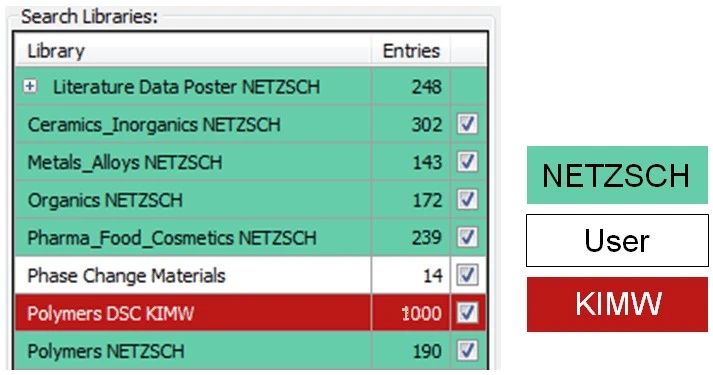
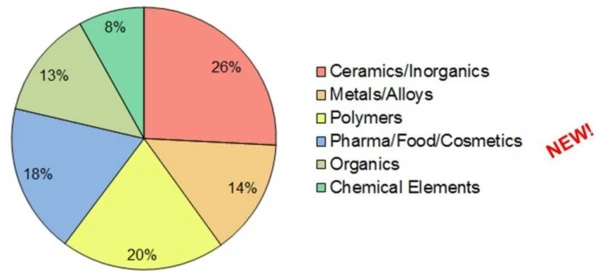
Shown in the figure 1 are the NETZSCH libraries covering various application fields: ceramics, inorganics, metals, alloys, organics, pharma, food, cosmetics and polymers (see also figure 2). Available as an option is the KIMW database developed by the Kunststoffinstitut Lüdenscheid, Germany, with DSC curves for 1000 different commercially available polymer grades reflecting 157 different polymer types. Information about the polymer supplier, color and filler material/content is available.
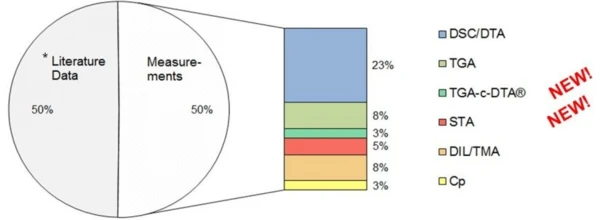
Identify does not only contain measurements, but also a great variety of literature data (see figure 3). And most of such literature data entries contain several material properties (Tg, Tm, α, cp, mass changes) at once!
Of course, users can also build up their own Identify libraries (in the example above: “Phase Change Materials”) and share them with their colleagues on the computer network!
Please feel free to visit earlier blog articles: