Webinar
15.10.2026
Characterizing Materials for Cooling the Next Generation of Computing
English
2:00 p.m. - 3:00 p.m. EDT (Eastern USA Time)
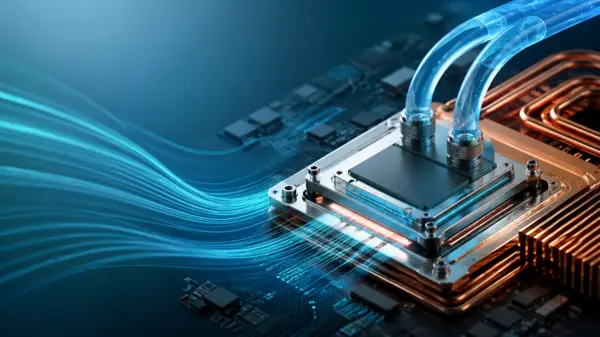
The rapid growth of artificial intelligence, high-performance computing, and advanced electronics is creating unprecedented thermal management challenges. As power densities increase and computing hardware becomes more compact, effective heat removal has become a critical factor influencing performance, reliability, energy efficiency, and operational costs.
This webinar explores the materials and technologies enabling modern thermal management solutions, from semiconductor packaging and thermal interface materials (TIMs) to liquid cooling systems, immersion cooling fluids, advanced heat spreaders, and phase change materials. Attendees will gain an understanding of the key thermal properties that drive cooling performance, including thermal conductivity, thermal diffusivity, heat capacity, thermal stability, and fluid rheology.
The presentation will demonstrate how thermal characterization techniques such as Laser Flash Analysis (LFA), Differential Scanning Calorimetry (DSC), Thermogravimetric Analysis (TGA), Dynamic Mechanical Analysis (DMA), and Kriechen (Rheologie)Creep is one of the earliest “controlled stress” rheometer tests that quite literally “creeps” the material, i.e. we measure over a relatively prolonged period the small movement (the creep defined as creep compliance, J) of the sample by applying a small constant stress.Rheology are used to evaluate and optimize materials for AI accelerators, data center infrastructure, electronic packaging, and advanced cooling technologies.
Through practical examples and industry applications, participants will learn how material selection and thermal property measurements can improve heat transfer, enhance reliability, extend component lifetime, and support the development of next-generation computing systems.
Participants will learn:
- Why AI and high-performance computing are driving new thermal management challenges.
- The critical thermal properties that influence cooling system performance.
- How thermal interface materials, heat spreaders, cooling fluids, and phase change materials are evaluated.
- How LFA, DSC, TGA, DMA, and Rheology can be used to characterize thermal management materials.
- Best practices for improving thermal performance and reliability in electronics and data center applications.
Speaker:
Peter Ralbovsky
Northeast Sales Manager at NETZSCH Instruments North America, LLC
NETZSCH Analyzing & Testing
Register now free of charge!