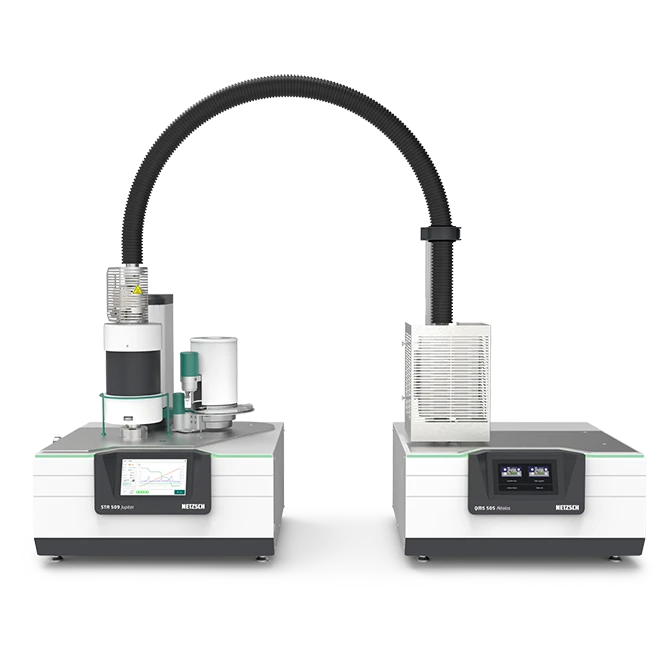
STA 509 Jupiter® Coupled to QMS 505 Aëolos®
Advanced Gas Analysis Combined with Thermoanalytic Precision
Highlights
Comprehensive Material Characterization Through Simultaneous Gas and Thermal Analysis
Understanding material behavior under thermal StressStress is defined as a level of force applied on a sample with a well-defined cross section. (Stress = force/area). Samples having a circular or rectangular cross section can be compressed or stretched. Elastic materials like rubber can be stretched up to 5 to 10 times their original length.stress requires sometimes more than just thermoanalytical data like mass change or heat flow. Coupling a thermal analyzer with a quadrupole mass spectrometer provides simultaneous insight into both thermoanalytic effects and the composition of evolved gases. This powerful combination delivers qualitative and quantitative information on evaporation, Decomposition reactionA decomposition reaction is a thermally induced reaction of a chemical compound forming solid and/or gaseous products. decomposition, OxidationOxidation can describe different processes in the context of thermal analysis.oxidation, and other thermal processes.
The NETZSCH capillary coupling maximizes these benefits through three key highlights. First, its high-performance QMS 505 Aëolos® mass spectrometer uses a hyperbolic quadrupole design for a wide mass range and exceptional sensitivity, even for low-mass gases such as hydrogen and helium. Second, the optimized coupling interface features a fully heated transfer system to prevent condensation and ensure fast response times. Third, the seamless software integration embeds mass spectrometer control and data evaluation directly into Proteus®, providing synchronized operation, intuitive workflows, and advanced visualization tools for comprehensive analysis.
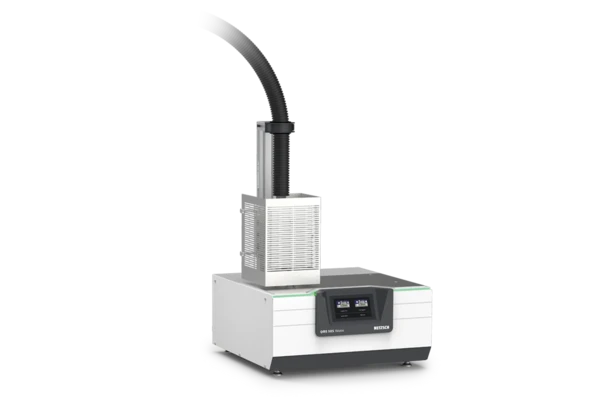
Why You Should Couple a Mass Spectrometer to a Thermal Analyzer
Coupling a mass spectrometer to a thermal analyzer significantly enhances material characterization by providing complementary information. While thermal analysis records changes in mass or heat flow, mass spectrometry detects and identifies the gases evolved during these processes - down to trace concentrations. Quadrupole mass spectrometers are particularly well suited for this purpose due to their high sensitivity, selectivity, and capability for continuous operation. This combination enables a deeper understanding of Decomposition reactionA decomposition reaction is a thermally induced reaction of a chemical compound forming solid and/or gaseous products. decomposition, OxidationOxidation can describe different processes in the context of thermal analysis.oxidation, and reaction mechanisms, making it ideal for both research and quality control.
Method
Mass Spectrometry (MS) Coupled to Thermal Analysis
Mass spectrometry (MS) is a highly sensitive analytical technique for detecting and characterizing gaseous Decomposition reactionA decomposition reaction is a thermally induced reaction of a chemical compound forming solid and/or gaseous products. decomposition products based on their mass-to-charge ratio. When coupled with thermal analysis - such as thermogravimetric analysis (TGA) - MS allows for reliable correlation between the mass changes in a sample and the nature of the gases evolved during heating.
This hyphenated system provides real-time insight into thermal events such as Decomposition reactionA decomposition reaction is a thermally induced reaction of a chemical compound forming solid and/or gaseous products. decomposition, OxidationOxidation can describe different processes in the context of thermal analysis.oxidation, and desorption. Thanks to its high sensitivity, mass spectrometry can detect even trace components, providing valuable information for material development, failure analysis, and quality control.
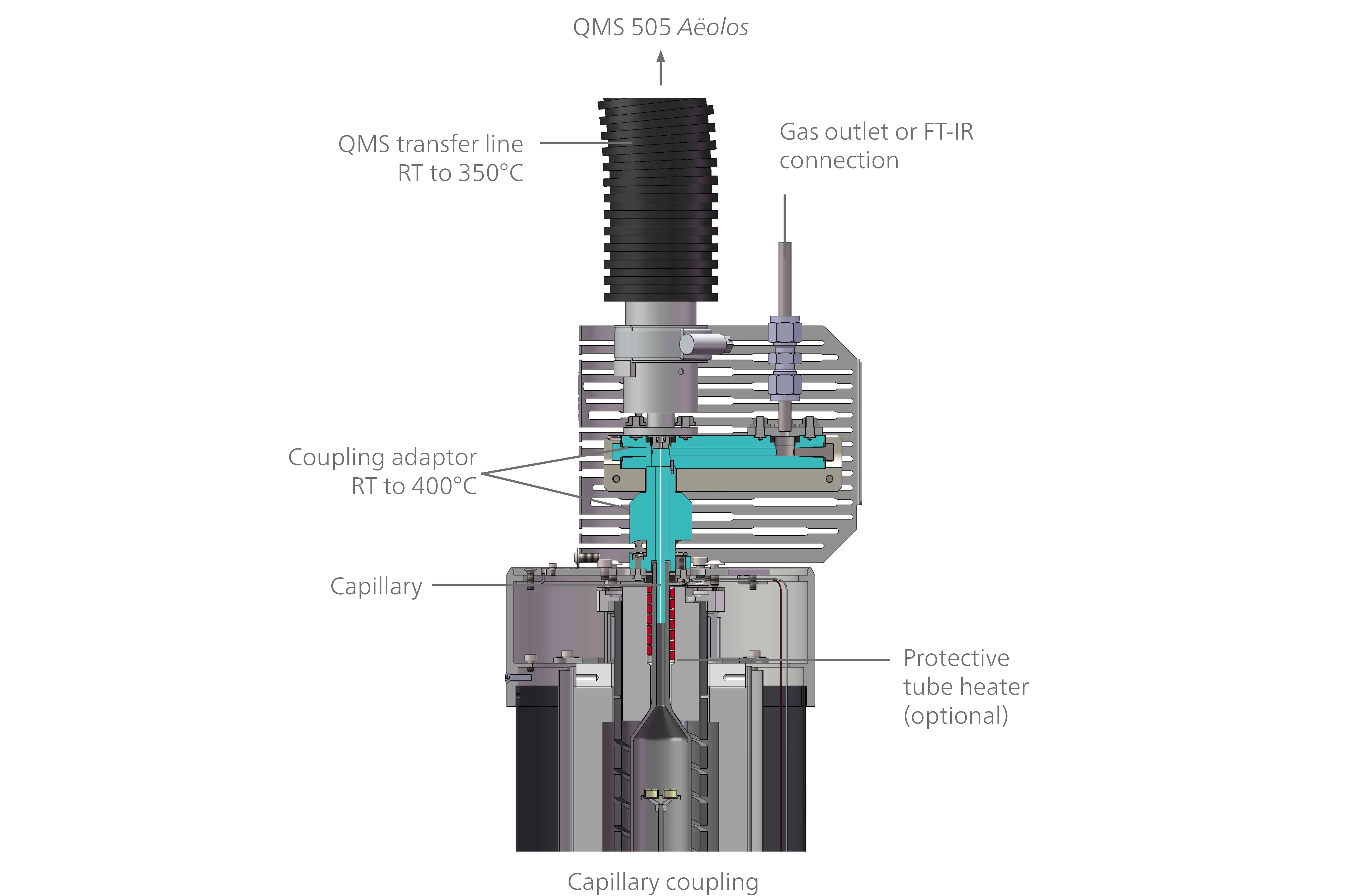
Working Principle of a Capillary Coupling Connected to a Mass Spectrometer
The aimn of thermal analysis coupling is to ensure that all relevant gases evolved during a thermal event are efficiently transported from the sample area into the ion source of the mass spectrometer. There, the gas molecules are ionized - typically by electron impact - and the resulting charged fragments are separated in the mass analyzer according to their m/z values. These are then detected and displayed as a mass spectrum, where each peak corresponds to a specific gas species or fragment.
Achieving reliable results requires optimized gas-flow conditions throughout the entire system - from the furnace of the thermal analyzer to the coupling interface, to the gas inlet of the mass spectrometer - offering both qualitative and quantitative information under optimized conditions. Since only a small portion of the purge gas is needed for MS detection, a bypass is installed at the gas outlet of the thermobalance. This diverts the excess gas flow and allows an additional gas analyzer - such as an FT-IR spectrometer - to be connected without affecting MS performance.
Specifications
Mass Range & Resolution
Heated Transfers System
Seemless Software Integration
The Perfect QMS for Gas Detection up to 300 u (Optionally 512 u)
- High peak stability over the full mass range
- Hyperbolic quadrupole system with pre-filter
- SEM with discrete dynodes and integrated Faraday cup for high dynamic range and long lifetime
- EI source with twoY2O3-coated filaments
- Internal reference for easy and fast calibration of the entire measuring system (mass axis, sensitivity, etc.) to different measurement conditions
- Operation and data evaluation with Proteus® software
- The Aëolos® can also be independently employed for the analysis of other gas sources
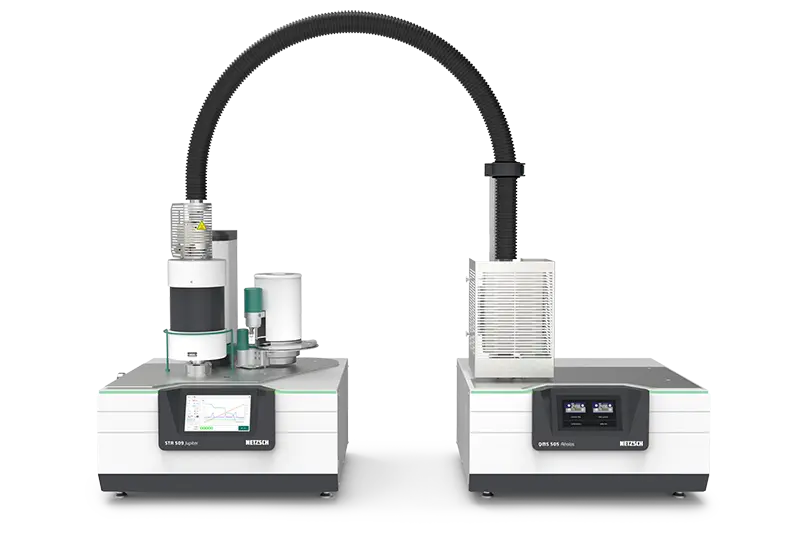
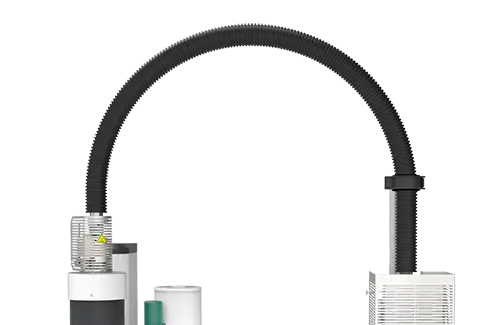
Optimized Capillary Coupling for Maximum Flexibility
- Minimization of cold spots in the transfer path
- Low probability of condensation due to an even temperature of 300°C (optionally 350°C) throughout the entire gas transfer system from the furnace outlet to the capillary to the MS gas inlet
- Flexible combination with standard thermoanalytical measurement methods (TGA, DSC, STA, DIL, etc.) along with the possibility of simultaneous coupling, e.g., MS-FT-IR
- Allows for TGA-MS measurements under humid atmospheres
- Allows for the upgrade of existing thermal analyzers
Technical Data
Mass range:
1 u to 300 u, optionally 512 u, including autotuning
Ion source:
Cross beam El
Detector:
SEM with discrete dynodes and integrated Faraday cup
Capillary:
Quartz-glass (max. 300°C), optionally stainless steel (max. 350°C), with supply coil, easily exchangable
Pressure reduction:
Single-step, from 10³ mbar to 5x10⁻⁶ mbar, no orifice
QMS measuring modes:
Scan analog, scan bargraph, MID



Proven Excellence in Service
At NETZSCH Analyzing & Testing, we offer a comprehensive range of services globally to ensure the optimal performance and longevity of your thermoanalytical equipment. With a track record of proven excellence, our services are designed to maximize the effectiveness of your devices, extend their lifespan, and minimize downtime.
Unlock the full potential of your equipment with our tailored solutions, backed by years of industry expertise and innovation.
Software
The Software for Performing Simultaneous Measurements Using Thermal Analysis Coupled with the QMS 505 Aëolos®
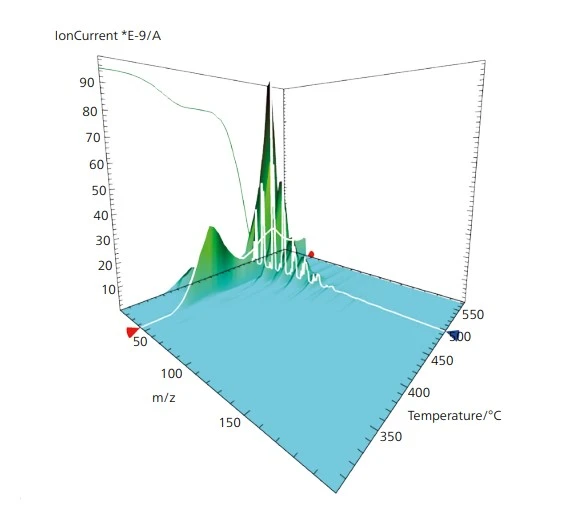
Measurements using STA/TGA/DSC/DIL instruments coupled to the QMS 505 Aëolos® can be controlled entirely via the Proteus® software, which integrates the measurement and analysis software of the two coupled methods into a single software application for both control and data acquisition.
Proteus® allows for the individual definition of any parameters relevant to thermal analysis (e.g., temperature program, heating rate, etc.) as well as any parameters relevant to the mass spectrometer (e.g., mass ranges, scans, etc.).
For hyphenated measurements, the two systems (STA/TGA/DSC/DIL and QMS 505 Aëolos®) are started and stopped simultaneously.
During the measurement, the thermoanalytical and MS data are displayed in a common plot and stored in one measurement file. This is then used in the Proteus® analysis software for joint presentation and evaluation. There is no longer any need for complicated data import or switching between different applications.
Comprehensive Information via Scan-Bargraph
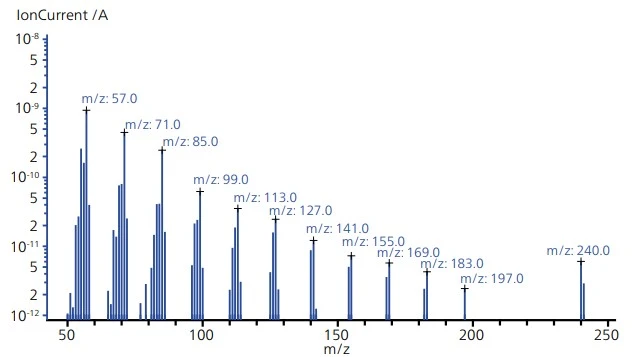
A scan-bargraph is often used as the basis for visualizing comprehensive information about all species evolved from a sample. Within the Proteus® software, users can display either all recorded mass numbers or only selected ones of interest, shown as time-resolved MID curves. In the example, one of the repeated scans is shown for heptadecane measured in argon.
Find out even more about the software:
- Complete integration of thermal analysis and QMS into Proteus®
- Method-based measurement and evaluation
- Simultaneous start/stop of coupled measurements
- Three scan modes: analog, bargraph, and MID
- Simultaneous use of different scan bargraph ranges
- Channel-specific optimization of scan mode, rate, and sensitivity
- Individual MS parameters per position of the automatic sample changer
- MS evaluation directly within Proteus®
- Precise correlation of MS data with time and temperature
- Display of MS signals (TIC and selected m/z) alongside thermal curves
- 3D visualization of spectra data combined with TGA/DSC and temperature
- Simple extraction of 2D MS data from 3D plots for database comparison
- Export of spectra in NIST format for external identification
Related Devices

Consultancy & Sales
Do you have further questions about the instrument or the method and would like to speak to a sales representative?
Service & Support
Do you already have an instrument and need technical support or spare parts?