26.05.2026 by Aileen Sammler
When Tenderness Becomes Measurable: Dynamic Mechanical Analysis of Food
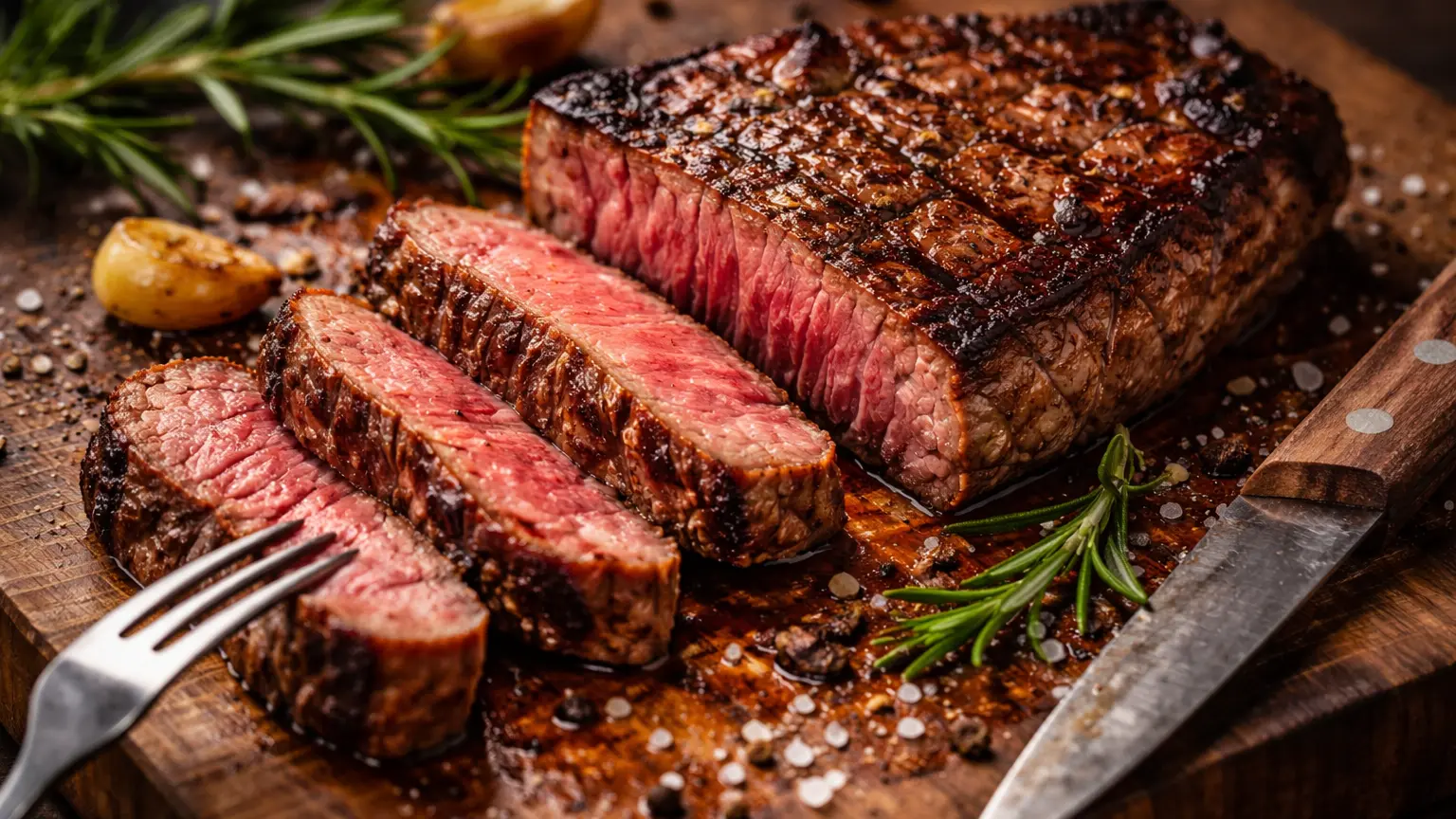
Tenderness, juiciness, or toughness are not just subjective impressions. These sensory properties are rooted in measurable mechanical behavior. Dynamic Mechanical Analysis (DMA) can quantify this behavior.
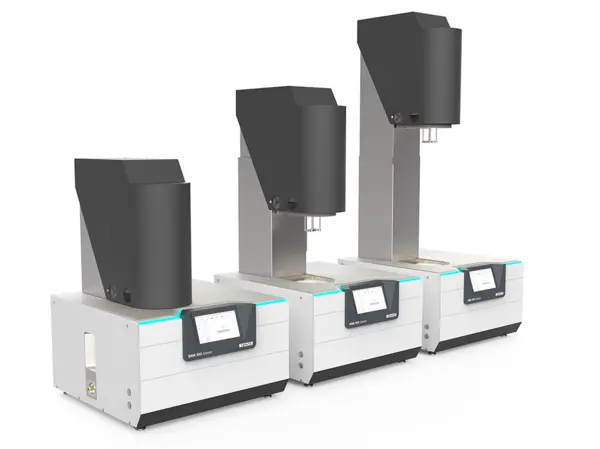
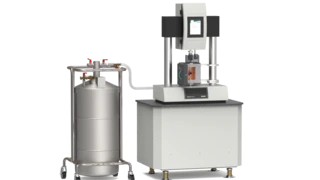
In this application, we demonstrate how the texture of steaks can be objectively characterized using the NETZSCH DMA 303 Eplexor®. The results are highly relevant for food development, quality control, and designing plant-based meat alternatives.
Why DMA in Food Analysis?
Under mechanical load, food materials exhibit viscoelastic behavior. Chewing, cutting, or heating, all change their mechanical response. DMA captures these changes and links them directly to sensory perception.
Among other things, the analysis shows how a food’s stiffness, damping, and overall resistance change with temperature, structure, and processing.
Key Findings: Why Temperature and Fiber Direction Matter
The study clearly shows that increasing doneness leads to a strong, non-linear increase in stiffness. A well-done steak is significantly stiffer than raw meat – a direct explanation for the perceived increase in toughness.
In addition, muscle fiber orientation plays a crucial role. Samples tested along the fiber direction show much higher stiffness than those cut across the fiber, providing quantitative evidence for a well-known culinary principle.
Value for Industry and Research
These insights support:
- consistent texture control in food production,
- objective quality assessment,
- and the engineering of texture in alternative protein products.
The NETZSCH DMA 303 Eplexor® turns sensory attributes into reliable mechanical data.
Conclusion
Dynamic Mechanical Analysis opens up new perspectives in the characterization of foods. It translates sensory perception into reproducible, quantitative results supporting innovation across modern food science.
👉 For full experimental details and measurement data, read the complete Application Note:
Become an Expert with our Free E-Learning Courses
All NETZSCH E-Learning Basic Courses are free of charge! The content is created by our laboratory method experts, who share their personal experiences with you. Take advantage of flexible online learning, fully adapted to your training needs!