Material Characterization for Food

Solve Food Quality, Stability and Process Challenges with Reliable Material Data

NETZSCH helps food and beverage teams characterize material behavior for formulation, process development, quality control and shelf-life investigations.

Talk to our experts to identify the right analytical method and instrument for your food application.

Food ingredients and laboratory equipment for thermal analysis and rheology

Talk to a Food Analysis Specialist

Discuss your formulation, ingredient, process or testing challenge with our team.

Contact NETZSCH Sales

Find the Right Characterization Approach for Your Food Application

The suitable method depends on the food matrix, the property to be measured and your laboratory workflow. Our specialists help identify an appropriate approach.
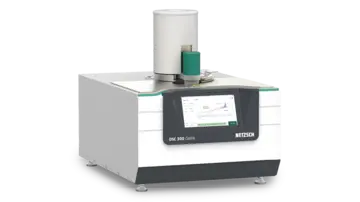
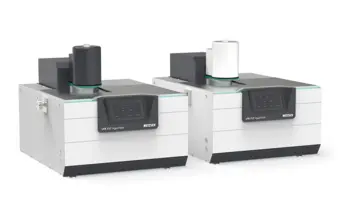
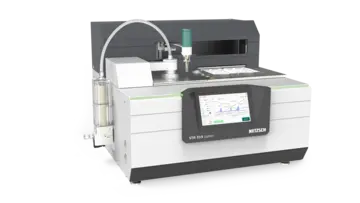
NETZSCH DSC instrument for polymer thermal analysis.
Differential Scanning Calorimetry (DSC)

Measure melting and crystallization behavior, glass transition and protein denaturation to compare formulations, define processing windows and assess thermal transitions in fats, oils, dairy products and other food ingredients.

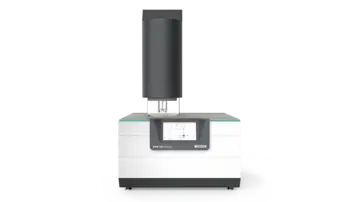
NETZSCH TG 309 Libra thermogravimetric analyzer.
Thermogravimetric Analysis (TGA)

Measure mass changes as a function of temperature or time to assess moisture and volatile content, thermal stability and decomposition behavior in foods, beverages and ingredients.

NETZSCH DSC instrument for polymer thermal analysis.
Simultaneous Thermal Analysis (STA)

Measure mass changes and heat flow simultaneously as a function of temperature or time to distinguish thermal transitions from evaporation and decomposition, and assess thermal stability in foods and ingredients.

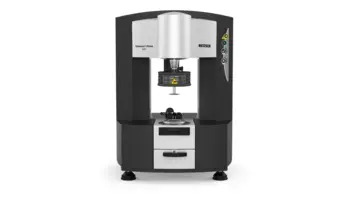
NETZSCH dynamic mechanical analyzers for polymer testing.
Dynamic Mechanical Analysis (DMA)

Measure storage and loss modulus, damping and relaxation behavior as a function of temperature, frequency or time to compare formulations and assess firmness, elasticity and structural changes in doughs, gels and other structured foods.

NETZSCH TG 309 Libra thermogravimetric analyzer.
Rotational Rheology

Measure viscosity, flow behavior and viscoelastic properties as a function of temperature, shear rate or frequency to compare formulations, optimize processing conditions and assess consistency and physical stability in beverages, sauces, emulsions and gels.

NETZSCH TG 309 Libra thermogravimetric analyzer.
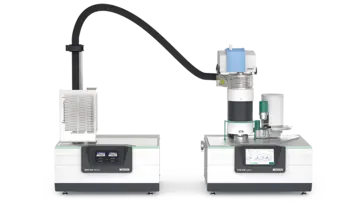
Evolved Gas Analysis (EGA)

Analyze gases released during thermal analysis to identify volatile compounds and decomposition products, investigate thermal degradation and characterize emissions from foods, beverages and ingredients during heating.

Food analysis laboratory supporting formulation and quality control

Discuss Your Food Application with an Expert

Discuss your formulation, ingredient, process or testing challenge with our team.

Contact NETZSCH Sales

When Food Performance Matters, the Right Data Supports Better Decisions

Food products must deliver consistent quality throughout processing, storage and use. Whether you are developing a new formulation, investigating a texture or stability change, or establishing a quality-control workflow, meaningful characterization data supports informed decisions across R&D, quality assurance and process development.

Understand thermal behavior
Evaluate melting, crystallization, gelatinization, glass transition, moisture loss, decomposition and thermal stability in ingredients and finished food products.
Support formulation and process development
Compare formulations, assess thermal and mechanical process windows, and measure flow, texture and structure development under application-relevant conditions.
Investigate changes during storage and processing
Examine how temperature, time, humidity, atmosphere or mechanical loading can affect food consistency, crystallization behavior, moisture content and shelf-life stability.

Talk to a Food Analysis Specialist

Tell us about your food material, formulation, process or testing objective. A NETZSCH representative will contact you to discuss suitable next steps.
 

Not Ready to Talk Yet?

Explore the Ebook “Decoding Food Properties: Thermoanalytical and Rheological Insights”

Discover how thermal analysis and rheology reveal the physical properties and behavior of food systems. This publication introduces DSC, TGA, evolved gas analysis, DMA, rotational and capillary rheometry, and kinetic analysis with Kinetics neo software. Practical food applications illustrate crystallization and polymorphism, starch gelatinization in baked goods and sauces, the stability of salad dressings containing herbs, and the flow and mouthfeel of creams, beverages, and emulsions.

Learn how these methods support food science, quality assurance, product development, and sensory research - helping professionals characterize food properties and make informed formulation and quality decisions.

Food ingredients and laboratory equipment for thermal analysis and rheology

Talk to a Food Analysis Specialist

Discuss your formulation, ingredient, process or testing challenge with our team.

Contact NETZSCH Sales

You May Also Be Interested In

Dive deeper into NETZSCH Analyzing & Testing: explore products, food-analysis applications, technical resources, services and e-learning.

AI Overview
An error occurred. Please try again.