Food Science at NETZSCH
Thermal Analysis and Rheology Solutions for the Characterization of Food
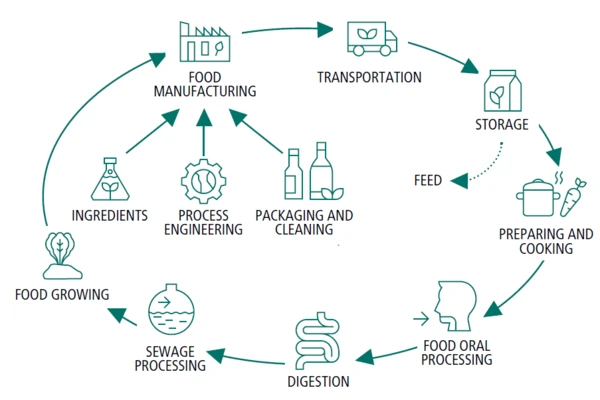
Food should not only serve to satisfy hunger, but also contribute to our well-being and health. And for some of us, it can mean even more: fun, happiness, adventure, and sociability. In any case, we all need balanced nutrition, including all the necessary proteins, fats, vitamins, trace elements and dietary fibers – and, of course, it’s best when it’s tasty too
ENJOY YOUR MEAL!
In order to ensure high food quality, to find suitable ingredients and the right preparation techniques, and to provide good mouthfeel – or in other words, to adapt it to your needs – a variety of analytical methods are typically applied. Amongst them are Thermal Analysis and Rheometry by NETZSCH. They play an important role in characterizing raw materials and food additives, in determining the appropriate food consistency, and in optimizing manufacturing processes.
Watch our free webinars on demand - whenever and wherever you want!
Alternative Proteins – Processing and Rheological Characterization
The development of plant-based meat alternatives has become a rapidly growing area in the food industry. A key factor for consumer acceptance is the ability to replicate the familiar texture and taste of animal-based products. To achieve this, it is essential to understand and control the techno-functional properties of the protein ingredients used in these products.
In this webinar, we will delve into the latest extraction technologies and analytical methods used to isolate and refine functional plant proteins. These technologies are critical for producing high-quality ingredients with specific structural and functional characteristics. We will explore how these proteins can be tailored and optimized for use in extrusion-based processing, a common method for creating meat-like textures in plant-based products.
Digesting and Analyzing Specialized Nutrition – Physiological and Analytical Aspects
In this webinar, Prof. Dr. Simone Lipinski and Dr. Xiaoai Guo from the German Institute of Food Technologies discuss key aspects of how specialized nutrition is digested and analyzed. They introduce the standardized INFOGEST protocol to simulate human digestion and explain how rheological methods help characterize food texture and viscosity at different digestive stages.
The Use of Capillary Rheometry in the Fabrication of Polymer Scaffolds and Devices for Biomedical Applications
Polymers are now widely used for tissue repair and replacement in the form of implantable biomedical scaffolds. Examples include surgical meshes, cardiovascular stents, nerve conduits, and bone regeneration scaffolds and fixation devices; thermal processing is a common denominator in all these applications. This webinar will discuss the capillary rheometer as the ideal tool for assessing the flow properties and Thermal Stability and optimizing the process parameters during the development of the compounds; it is especially critically important in the evaluation of degradable polymers with a very narrow processing window. The presentation will also focus on using rheology as a referee in the molecular weight determination of a series of polymers, to produce small diameter fibers for mechanical testing, and filaments for use with 3D printers that run on fusion deposition modeling technology.
Rheodialysis - An Experimental Platform for Changing a Sample’s Chemical Environment during Rheological Testing
In this presentation we will discuss a technique known as rheodialysis, which extends the capabilities of standard rheology by incorporating a customised flow cell with a porous membrane into a parallel plate rheometer [4]. We have shown that this approach allows a sample’s chemical environment to be exchanged, while simultaneously probing its mechanical properties.
We will demonstrate experimental results that apply this technique to alginate biopolymer hydrogels assembled through diffusion of calcium ions. By probing alginate hydrogels at different plate separations, we shown that the resulting hydrogels have different properties owing to the slow diffusion calcium ions through the incipient gel network. We also show that the fractal dimension of these hydrogels varies with the distance from the source of ion diffusion and we model this process using reaction diffusion models.
Decoding Food Properties: Thermoanalytical and Rheological Insights
Free download of our latest applications book!
The book explores the crucial role of rheology and thermal analysis in understanding the physical properties and behavior of food systems. It describes shortly the methods (DSC, TGA, Evolved analysis), DMA, Rotational and Capillary rheometry and Kinectis analysis with Kinetics neo Software).
Furthermore it gives different examples of testing for quality control, research and developpment, etx. (for example: PolymorphismPolymorphism is the ability of a solid material to form different crystalline structures (synonyms: forms, modifications).polymorphism of sugars, gelatinization of starch, stability of salade sauce containing herbs, sensory perception, ...).

“The e-book "Decoding Food Properties" is clearly structured and easy to understand. I was particularly impressed by the presentation of rheological methods and the section on quality control of chocolate.”
Production of Vegan Proteins with the Help of Thermal Analysis and Rheology
A Customer Success Story by Prof. Dr. Tomas Kurz, ProteinDistillery GmbH, Ostfildern, Germany about the creation of cleanlabel protein ingredients with superior functionality and nutritional properties
Processing Solutions for Food
Fine grinding, mixing of solids in liquid and conching of chocolate masses NETZSCH machines and systems for the food and confectionery industry
NETZSCH Grinding & Dispersing is an innovative, internationally-active partner with sales and service locations in 35 countries. NETZSCH has decades of experience in the production of confectionery masses and the fine grinding of foodstuffs.
You profit from economical, energy-efficient production processes that meet with the highest standards of hygiene and from the greatest production and investment security that comes from the many years of NETZSCH experience in the food industry.
Rheometry and Rheological Characterisation
A Chapter in "Food Texturology: Measurement and Perception of Food Textural Properties", available at Springer Verlag
The development of rheometers has considerably improved our understanding of the textural properties of foods. In this chapter, we provide a thorough explanation of rheological behaviour, including the origins of modern rheometers. Consideration is given to the role of test geometries and specific types of measurements that can be undertaken.
Our partners