Food
Thermal Analysis and Rheology Solutions for the Analysis of Foods
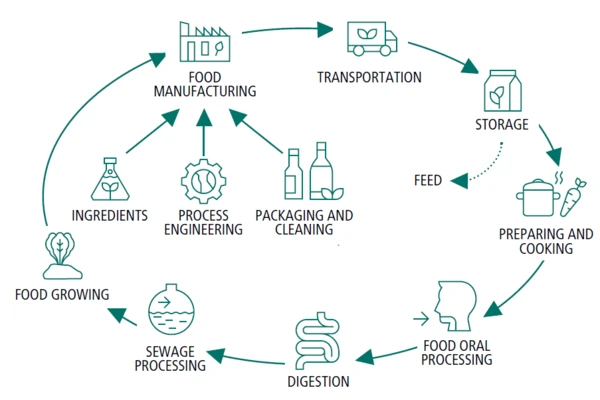
Food should not only serve to satisfy hunger, but also contribute to our well-being and health. And for some of us, it can mean even more: fun, happiness, adventure, and sociability. In any case, we all need balanced nutrition, including all the necessary proteins, fats, vitamins, trace elements and dietary fibers – and, of course, it’s best when it’s tasty too.
ENJOY YOUR MEAL!
In order to ensure high food quality, to find suitable ingredients and the right preparation techniques, and to provide good mouthfeel – or in other words, to adapt it to your needs – a variety of analytical methods are typically applied. Amongst them are Thermal Analysis and Rheometry by NETZSCH. They play an important role in characterizing raw materials and food additives, in determining the appropriate food consistency, and in optimizing manufacturing processes.
How Can You Benefit from Thermoanalytical and Rheological Tests?
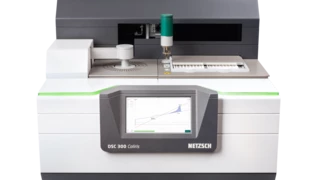
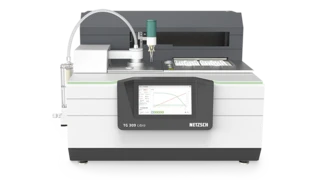
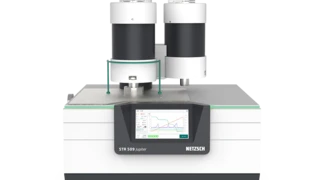
Characteristic physicochemical properties of food ingredients or their changes during heating or cooling can be measured using various thermoanalytical techniques such as Differential Scanning Calorimetry (DSC), Thermogravimetric Analysis (TGA), and Simultaneous Thermal Analysis (STA). DSC identifies and determines the Glass Transition TemperatureThe glass transition is one of the most important properties of amorphous and semi-crystalline materials, e.g., inorganic glasses, amorphous metals, polymers, pharmaceuticals and food ingredients, etc., and describes the temperature region where the mechanical properties of the materials change from hard and brittle to more soft, deformable or rubbery.glass transition and/or Melting Temperatures and EnthalpiesThe enthalpy of fusion of a substance, also known as latent heat, is a measure of the energy input, typically heat, which is necessary to convert a substance from solid to liquid state. The melting point of a substance is the temperature at which it changes state from solid (crystalline) to liquid (isotropic melt).melting point of solid, semi-solid or liquid food components as well as the polymorphic behavior, for example, of fats. By means of TGA, the thermal and oxidative stability of substances as well as the composition (volatiles, residues from extraction, Ash ContentThe ash is a measure of the mineral oxide content on a weight basis. Thermogravimetric analysis (TGA) in an oxidative atmosphere is a well-proven method to determine the inorganic residue, commonly referred to ash, in organic materials such as polymers, rubbers, etc. Therefore, the TGA measurement will identify if a material is filled and calculates the total filler content.ash content, etc.) of foodstuff can be studied.
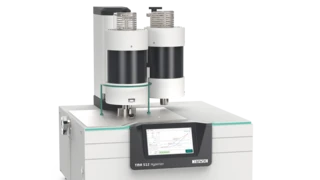
Characterization of the rheological behavior of individual components and of final products goes far beyond flow curves and viscosity. Viscoelastic properties, Yield StressYield stress is defined as the stress below which no flow occurs; literally behaves like a weak solid at rest and a liquid when yielded.yield stress, gelation properties, and flow properties of liquids and semi-solids under relevant shear rates are examples of rheological application in the food field. You can even simulate the chewing process in the mouth by using the so-called mastication mode. The Kinexus rotational rheometer and the Rosand high-pressure capillary rheometer cover the broadest shear rate range available on the market, and are indispensable to the research, development and quality control of foods.
Decoding Food Properties: Thermoanalytical and Rheological Insights
Free download of our latest application book!
The book explores the crucial role of rheology and thermal analysis in understanding the physical properties and behavior of food systems. It describes shortly the methods (DSC, TGA, Evolved analysis), DMA, Rotational and Capillary rheometry and Kinectis analysis with Kinetics neo Software).
Furthermore it gives different examples of testing for quality control, research and developpment, etx. (for example: PolymorphismPolymorphism is the ability of a solid material to form different crystalline structures (synonyms: forms, modifications).polymorphism of sugars, gelatinization of starch, stability of salade sauce containing herbs, sensory perception, ...).

“The e-book "Decoding Food Properties" is clearly structured and easy to understand. I was particularly impressed by the presentation of rheological methods and the section on quality control of chocolate.”
Production of Vegan Proteins with the Help of Thermal Analysis and Rheology
A Customer Success Story by Prof. Dr. Tomas Kurz, ProteinDistillery GmbH, Ostfildern, Germany about the creation of cleanlabel protein ingredients with superior functionality and nutritional properties
Processing Solutions for Food
Fine grinding, mixing of solids in liquid and conching of chocolate masses NETZSCH machines and systems for the food and confectionery industry
NETZSCH Grinding & Dispersing is an innovative, internationally-active partner with sales and service locations in 35 countries. NETZSCH has decades of experience in the production of confectionery masses and the fine grinding of foodstuffs.
You profit from economical, energy-efficient production processes that meet with the highest standards of hygiene and from the greatest production and investment security that comes from the many years of NETZSCH experience in the food industry.
Rheometry and Rheological Characterisation
A Chapter in "Food Texturology: Measurement and Perception of Food Textural Properties", available at Springer Verlag
The development of rheometers has considerably improved our understanding of the textural properties of foods. In this chapter, we provide a thorough explanation of rheological behaviour, including the origins of modern rheometers. Consideration is given to the role of test geometries and specific types of measurements that can be undertaken.
Our partners